My Marketing Stack
Search and filter sharp, essential coverage across every marketing topic that matters.

Deloitte's 2026 holiday survey finds Gen Z and millennials will account for 50% of holiday spending for the first time, with Gen Z's share up from 10% to 16%. Shoppers who use generative AI, search and social media together plan to spend $2,893, more than double those who use none of the three.

Wunderkind and Cordial research finds 61% of marketers say product recommendations have a major impact on conversion, while only 32% of consumers say they make shopping easier. Shoppers credit price, saved carts and faster checkout, and Deloitte Digital finds 87% of brand leaders rate their personalization highly against 29% of consumers.

Liferay's survey of 800 multilingual US adults found 56% have decided not to buy because a site felt poorly adapted to their language, and 54% of those who rated the translation good still walked away. Census and GDP data show this is a large domestic audience, not an export market.

Nonprofits collect 37% of their online revenue in December, yet donor counts are still shrinking and retention is stuck at 18%. New data shows the gift is increasingly won or lost on a phone, where wallets are fast replacing the card.

California will require every browser to offer a built-in opt-out signal from January 1, yet 73% of 59 scanned hospital sites ran ad trackers with it switched on. The Disney settlement shows how far regulators expect that opt-out to reach.

Eight of the top 10 US retailers lost share of wallet over the past year while 31% of shoppers hold six or more free memberships. Price, hidden fees and checkout friction are deciding where loyalty actually lands.

Adobe forecasts social media's share of US online holiday revenue will rise 17% this season, against 4% for paid search. But traffic is outpacing orders, so the gain goes to brands that shorten the path from feed to checkout.

KFF counts 11 carriers leaving the ACA Marketplaces for 2027, Cigna among them, while the median proposed premium rises 15%. With open enrollment starting November 1, hundreds of thousands of members must choose a new plan, and payer marketers must win them without the tracking tools HIPAA puts at risk.

PYMNTS Intelligence estimates 56 million US consumers abandoned an online cart in a single month because their preferred payment method was missing. With 57% of shoppers comparing payment options before they shop, checkout coverage is now part of demand generation.

Zappi tested more than 3,300 social video ads with real consumers and found creator-style ads were 30% less likely to be top performers. Three or more distinctive brand assets was the only creative trait that substantially lifted brand connection.

Validity finds 44% of consumers get more promotional email over the holidays, and nearly half of Gen Z say a brand's holiday email has cost it their trust. With Adobe forecasting $95.8 billion of online spend in October alone, the longest stretch of the season is also the most fatiguing.

Kantar's survey of 806 marketers and 23,452 consumers finds a net 75% plan to raise AI assistant spend in 2027, yet only 23% of consumers trust what those assistants recommend. Usercentrics data shows the trust gap is already costing brands revenue.

Jasper's survey of 1,400 marketers finds 91% use AI, yet only 41% can prove a return, down from 49% a year earlier. Brand, legal and compliance reviews are the top obstacle to scaling, so measurement and review now decide whether AI pays.

InstaMed's 2025 survey data finds 58% of consumers would switch providers for a better payment experience, yet 63% of providers still collect with manual, paper-based processes. The statement is now part of the brand, and the data behind it sits in the marketing stack.

US charitable giving passed $600 billion for the first time in 2025, but donor counts fell 3.6% and new donor retention stayed flat. With GivingTuesday nine weeks away, social donors converting to recurring gifts at twice the rate of email donors point to where the second gift comes from.

CMS is relaxing six Medicare Advantage marketing rules from October 1, from appointment timing to superlatives, just as enrollment opens on October 15. None of it touches website tracking, and a 2026 audit found 73% of 59 hospital and clinic sites running ad trackers despite a privacy opt-out.

California's SB 690 would end private pen register suits over website trackers, but the Section 631 wiretap claims behind most session replay and chat cases survive. AB 1542, in the same package, would bar selling or sharing sensitive personal information with third parties.

Antavo's 2026 research finds 82.6% of marketers believe their loyalty programme makes customers feel valued, but only 56.2% of members agree. Marketer satisfaction and reported ROI are both up, yet slow earning, expiring points and fragmented data explain why members see a different programme.

Bain expects US holiday sales to top $1 trillion for the first time, and 24% of online shoppers plan to start the season on an AI platform. Yet only 23% of consumers trust AI to handle a payment, so the final step of the journey still belongs to the brand.

Wyzowl's 2026 survey found just 82% of marketers now call video ROI good, down from an all-time high of 93% a year earlier, even as adoption hit a record. The gap is opening between teams still broadcasting video and teams who connected it to data and checkout.

Salesforce surveyed 4,450 marketers and found 75% have adopted AI, yet 84% still run generic campaigns. The teams that unified their data first, not the ones with the most AI tools, are closing the personalization gap.

More than one in five videos YouTube recommends to a brand-new account is AI slop, and 278 channels built entirely on it have pulled in 63 billion views. Consumers are noticing faster than most brand policies are catching up.

Amazon HSA spend grew 123% year over year and GLP-1 platform spend is up more than 50-fold, but the tracking pixels marketers use to chase that demand just cost one health system $12.225 million.

A study of 4,840 targeted accounts puts ABM win rates at 41% against a 17% non-ABM baseline. The differentiator is account selection discipline rather than tactics, and the authors are candid that the AI figures are observational.

Gartner's 2026 CMO Spend Survey finds marketing teams committing 15.3% of budget to AI while only 30% report processes mature enough to scale it. The gap is already showing in missed acquisition targets and a martech line squeezed to a five-year low.

The 2026 martech landscape grew 0.79% as 1,488 products arrived and 1,367 vanished. That churn reads as consolidation, but stack rationalisation keeps failing for a reason the tool count does not explain.

Pew tracked 68,000 real searches and found click-through fell from 15% to 8% when an AI summary appeared. The teams adapting fastest are treating search as one channel among several rather than the foundation.

Median MQL to SQL conversion sits at 13% against a top decile of 31%, and marketing-sourced revenue varies from 28% to 51% depending purely on go-to-market motion. Volume targets cannot explain either spread.

Analysis of 1.3 million LinkedIn posts finds engagement up 8% year over year while video views fell 36% and follower growth for the largest pages dropped from 21.6% to 6.4%. The rate is rising because the denominator is shrinking.

Tier-one launch cadence is up 30% since 2023, but pipeline lift decays from 38% in the launch quarter to 5% by the third. Meanwhile the median launch asset reaches just 22% of the sales team.

As AI reshapes buyer behaviour and competitive dynamics, CMOs face a defining moment: transform the demand generation model or risk ceding ground to faster-moving competitors. We surveyed 500 marketing leaders.

New research from 2,000+ marketing teams shows content output has doubled in three years while organic reach continues to decline. We examine the strategies that are actually cutting through.

LinkedIn, Instagram, and X have all updated their algorithms in the past 90 days. The brands that adapted quickly are seeing engagement gains while laggards face significant reach declines.

Most product launches underperform, not because the product is wrong, but because the go-to-market motion is misaligned with how buyers actually discover and evaluate solutions. Here's what leading PMM teams do differently.

A year-long study of 450 B2B content programmes reveals surprising results about which formats correlate most strongly with pipeline velocity, and why the answer depends on buyer journey stage.

The average enterprise marketing team now manages 91 tools. A new study reveals that less than a third are actively used, and the consolidation movement is creating clear winners among platform players.

A landmark study of 300 B2B brands reveals that the most successful organisations invest in brand and performance marketing simultaneously, with results that compound in ways single-channel teams cannot match.

Last-touch attribution has long been the default for marketing teams, but new multi-touch models are revealing a very different picture of what actually drives pipeline. Here's what the data shows.

AI-powered search has fundamentally altered how buyers discover content. Marketing teams that adapt their SEO strategy now will capture significant organic advantage as competitors fall behind.

Marketing operations teams are deploying AI models faster than workflows can adapt. The teams that invest in enablement now will have a significant competitive advantage within 18 months.

New benchmarking data shows that companies focused on ICP-fit leads close deals 38% faster than those chasing volume, yet most marketing teams are still rewarded for the wrong metrics.

Community-led growth is moving from buzzword to budget line. New data from 200 B2B community programmes reveals the design choices that separate high-converting communities from expensive vanity projects.

Competitive positioning has never been harder to maintain. We look at the frameworks the most distinctive B2B brands are using to stay differentiated as markets commoditise and buyer expectations evolve.

The product marketing teams generating the most pipeline treat competitive intelligence as a strategic asset, not a reactive exercise. A new study of 180 PMM functions maps the practices that create sustainable advantage.

The battle for the single source of truth is reshaping how marketing and sales teams share data. We examine the architectural decisions that separate aligned organisations from siloed ones.
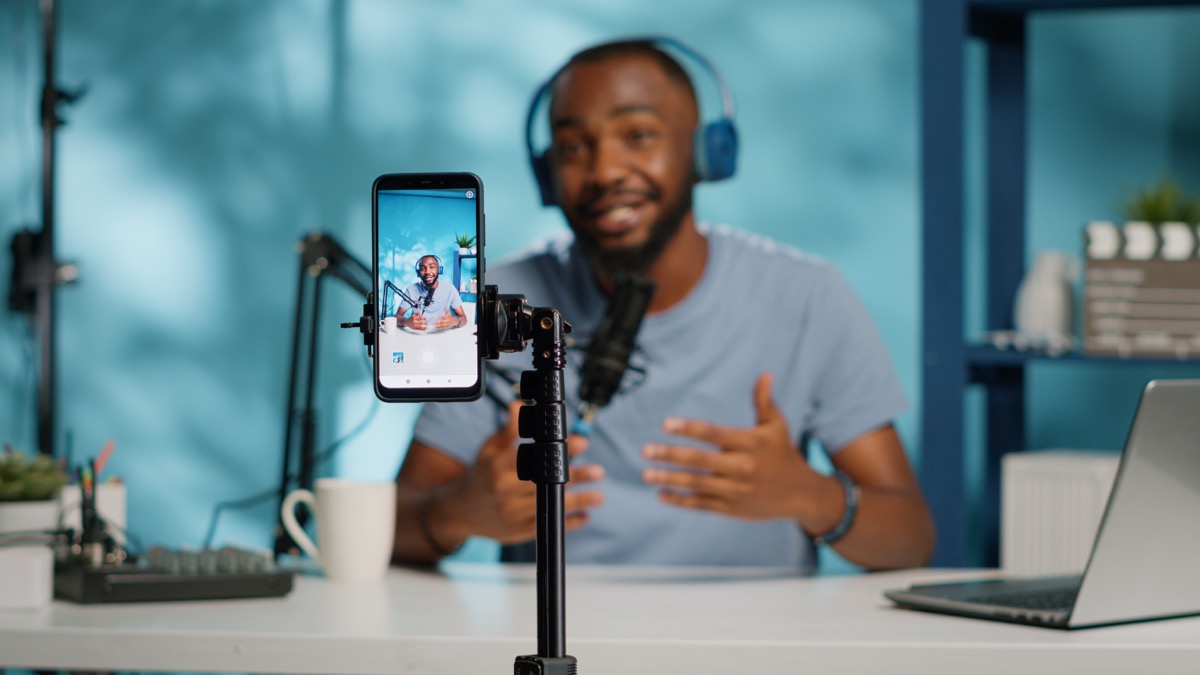
Hype aside, what does real B2B influencer marketing look like right now? We studied 150 partnerships across technology, financial services, and professional services to find out what actually works.

Average CMO tenure has fallen to 28 months, the lowest in a decade. Marketing leaders and board members share the structural issues driving the churn, alongside the retention strategies that are working.

Pricing decisions made without marketing input leave significant revenue on the table. We examine how the best product marketing organisations are influencing pricing strategy and the results they're driving.
Try a different search term or topic filter.
