Key Takeaways
- Only 4% of UK marketers in GumGum's 2026 global study say past behaviour is the key to ad effectiveness, while 76% say context or mood has the greatest impact.
- 81.5% of US marketers agree mindset advertising can outperform identity-based targeting, yet 59.8% would still default to identity-based advertising for their next campaign.
- 82% of UK marketers say their brand incorporates mindset effectively, but only 40% always factor it into campaign planning.
- Website tracking pixel use among US hospitals and health systems fell from over 98% in 2021 to 30% in 2025, as lawsuits and federal pressure reshaped the identity toolkit.
Ask marketers what makes an ad work and most no longer say “knowing who the person is.” They say the moment: what someone is reading, watching or feeling when the ad arrives. Then ask how they would plan a campaign launching next week, and most reach straight back for the audience segment. A new global study puts numbers on that gap, and it is wide enough to ask whether media planning has kept up with what its own planners believe.
Belief Has Moved, the Media Plan Has Not
GumGum's The Marketers' Take On Mindset: The 2026 Global Report surveyed more than 2,000 marketers across the US, the UK and Australia. According to Roastbrief's coverage of the US findings, 83.6% of marketers globally agree that mindset advertising, GumGum's term for reaching people according to their frame of mind in the moment, outperforms contextual advertising alone. Among US marketers, 81.5% agree it can outperform identity-based targeting and 94.3% say mindset matters more than audience fit.
Yet 59.8% of US marketers would still default to identity-based advertising for their next campaign, and that was the lowest rate among the markets surveyed. “The data tells a clear story: marketers believe in mindset, but belief and execution are still two different things,” said Laura Foster, SVP of global marketing at GumGum. “AI is reshaping nearly every aspect of our industry, yet most campaigns are still being planned the way they were a decade ago.”
The UK numbers, reported by Marcomm News from a sample of more than 500 UK marketing professionals, are starker. Only 4% say past behaviour is the key to ad effectiveness, while 76% say context or mood has the greatest impact (48% context, 28% mood). And still 61% would choose identity-based advertising over a mindset-based approach for a campaign launching next week. Belief and habit point in opposite directions, and habit is winning the buy.
One caveat belongs up front. GumGum sells mindset-based targeting, the report does not disclose its fieldwork dates or question wording, and agreeing that something “can outperform” is not the same as proving it does. The study measures what marketers believe, not what campaigns delivered. That is still useful, because the distance between belief and practice is exactly what a planning team can act on.
Why Identity Keeps Winning the Plan
The barriers marketers name are practical rather than philosophical. US respondents cited understanding their audience (16.6%), data access (10.0%) and resources (7.6%) as the leading obstacles. Globally, the UK coverage lists audience complexity (16%) and data access or quality (13%) at the top. Identity-based buying has a decade of tooling, reporting and habit behind it; a segment is easy to brief, easy to buy and easy to explain in a recap.
There is also a self-assessment problem. 79.4% of US marketers rate their brand's mindset alignment as effective or very effective, and 82% of UK marketers say the same, but only 40% of UK marketers always factor mindset into planning. When most teams believe they already do something well, there is little pressure to change the brief. “Our challenge now is to help marketers make it a core part of campaign planning,” said Jess Aylett, head of sales for the UK and international at GumGum.
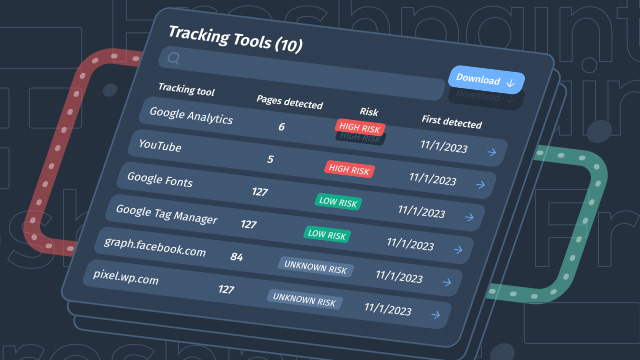
Meanwhile, the identity toolkit is narrowing in the sectors where scrutiny is sharpest. Bloomberg Law reported that over 98% of US hospitals and health systems used website tracking pixels in 2021, citing a Health Affairs study. Analysis by the agency Hedy & Hopp put the figure at 55% in 2024 and 30% in 2025, and the share of providers removing all pixels rose from 12% to 28%. Lawsuits and pressure from federal regulators drove the change. A plan that depends on behavioural signals is a plan exposed to whatever happens to those signals.
Relevance Is a Creative Problem as Much as a Media One
The study's most useful finding may be what marketers expect mindset alignment to improve. Globally, respondents named brand favourability (60.7%), brand recall (42.2%), click-through and engagement (41.3%) and purchase intent (34.1%). In the UK, 96% said mindset-matched ads reach people beyond a brand's core target audience. Those are reach and brand outcomes, which is precisely where an identity-only plan, built to find the same known segment again, tends to run out of road.
Context alone is not a fix, though. In a separate analysis of contextual placements, GumGum found that 41% of placements that were well aligned with the intended audience lacked the creative relevance needed to capture attention. The right page with the wrong ad still underperforms. “With the enhancements to the Mindset Graph, media and creative are no longer siloed,” said Kerel Cooper, GumGum's chief marketing officer, which is a product claim, but the underlying point applies to any stack.
Consumers have been saying something similar for a while. In GumGum's earlier survey of 3,000 consumers in the US, UK and Canada, reported by ExchangeWire, 94% preferred contextually relevant ads to ads based on their browsing history, and almost 80% said they were more likely to engage with ads that match the content they are viewing. Over a third named privacy as the most important factor in an ad experience.
A Planning Playbook for Closing the Gap
- Run one campaign the other way round. With 61% of UK marketers defaulting to identity for next week's launch, pick a single flight and brief it from moment and context first, then layer audience data only where it adds lift.
- Test it against the segment, not in place of it. The study measures belief, not results, so build a holdout or split test that compares a mindset-led plan with your identity-led default on the same budget and outcome.
- Measure the outcomes mindset claims to move. Marketers expect gains in favourability (60.7%) and recall (42.2%), so add brand lift and reach-beyond-core metrics alongside clicks and conversions.
- Brief creative to the moment. With 41% of well-targeted placements lacking creative relevance, produce variants matched to the contexts you buy and test them, rather than running one asset everywhere.
- Audit what your targeting depends on. Hospital pixel use fell from over 98% to 30% in four years; map which tracking signals your segments rely on and what happens to the plan if they disappear.
- Make it a planning step, not a slogan. Only 40% of UK marketers always factor mindset into planning, so add it as a required field in the media brief and the campaign recap.
The marketers in this study are not short of conviction. What they lack is a planning process that reflects it. The teams that close the gap will be the ones that stop treating context and moment as a nice idea for the brand deck and start testing them, budget line by budget line, against the audience segments they have always bought.